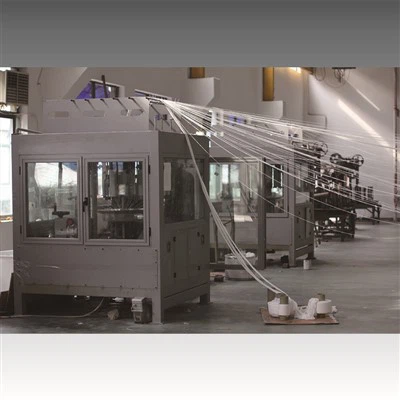
The difference between tools and machines is mainly reflected in the definition, function, degree of automation, user skills and degree of dependence.
Definition and scope of use:
Tools: Tools refer to tools used by people to realize activities or create outputs, usually including different categories such as hardware and software, which can meet people's life and work needs. For example, computers, cars, machines, etc.
Machines: Machines refer to mechanical devices that can automatically process complex workpieces, usually used for mass production to improve output and efficiency. For example, extruders, lathes, injection molding machines, etc.
Functions and user skills:
Tools: Tools mainly assist workers to complete processing, installation, testing and other tasks, and users need to have certain skills and physical strength. For example, when using tools such as wrenches and screwdrivers, users need to master their use.
Machines: Machines emphasize functional specialization, and users only need to perform simple operations or monitoring according to the operating requirements of the machine. Machines complete complex tasks through automation, and users do not need to have superb skills, but only need to adapt to the movement laws of the machine.
Degree of automation:
Tools: Tools are completely manually operated, and users need to manually complete various actions, with a low degree of automation.
Machines: Machines have a high level of automation and can automatically complete complex processing tasks, reducing human intervention.
Economy and applicable scenarios:
Tools: Tools are generally cheaper and are suitable for workpieces with small quantities or simple processing content.
Machines: Machines are more expensive, but because of their automation and high efficiency, they are suitable for mass production and complex processing tasks.
Historical background and technological development:
Tools: The history of tools can be traced back to the early days of human civilization, and they were mainly used for manual operation.
Machines: The development of machines is mainly in modern times, especially after the industrial revolution, emphasizing automation and large-scale production.